

For most people, desk work is now combination of going into the office and working from home. More often than not our desk set up and routines are different in those two environments and whilst some variables can be easily managed others perhaps cannot. With this in mind, here is a look at some of the common problems and some simple do’s and dont’s.
Depending on what you are working with, you may not manage to achieve all of the points listed below but have a look, or better yet, perhaps get a colleague to to have a look at you when you are working and give you feedback.
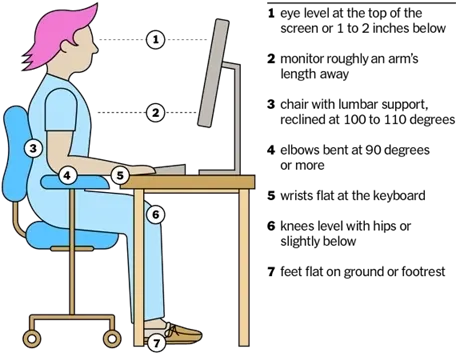
The above check list shows you how various bits of your body should be positioned in relation to one another and its a fine balance which may take a bit of tweaking. There’s limited value in investing in a very expensive desk chair at home if your laptop is set upon on a tiny garden table you found at the back of the shed. Equally, buying an nice new extra large monitor which doesn’t actually fit at the enter of your desk will likely add to any neck strain if positioned incorrectly.
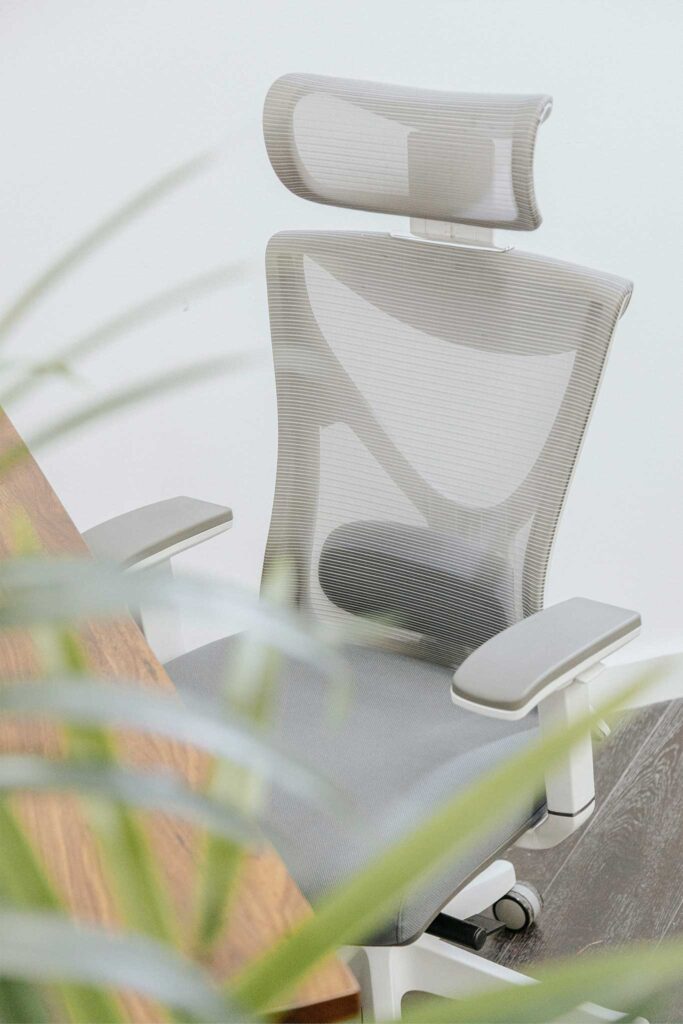

A big part of the problem with desk work is the length of time you are not moving. Most people sit for too long so any changes you can make here will be beneficial. Here are some pointers:
If you are taking a call or reading a document, can you stand up instead of sitting down?
Set a timer on your phone to remind you to stand up, go get a water top up, or any other valid excuse to get out of your chair.
Please note: standing all day can equally lead to joint or muscle dysfunction so try too keep it balanced.
Ideally you want some quick exercises to encourage blood flow back in to those areas that need it most. This should be combination of neck, shoulders upper back, lower back, knees and ankles. Keeping them areas moving will help prevent joint stiffness and tension build-up in muscles. Your Osteopath or Physiotherapist will be able to advise you on the correct movements for you, especially when any injuries or medical conditions are taken into consideration.


This simple point is often overlooked. When you consider how much of our body is made up of water, you quickly appreciated that joints and muscles can’t stay well lubricated if you aren’t drinking enough water which can contribute to aches and pains . Keep a bottle on your desk and sip regularly, or perhaps set a timer on your phone again.
This advice goes for pretty much anyone but keeping your muscles, joints and blood flow in good shape will help your body deal with problems it encounters, including sitting in a chair!
It almost doesn’t matter what exercise you do regularly, the important thing is that you enjoy it . The exception here might be an injury or medical condition. Your Osteopathy or physiotherapist is well placed to advise you on this


If you’re have problems getting your set-up correct, speak to your HR or facilities department to see if they can provide you with equipment. In this situation it can be helpful to have a note from a GP, Osteopath, or Physiotherapist which gives some further clarification about what is needed and why.
Sometimes it can be helpful for a professional to identify what your strengths and weaknesses are so that you make the necessary adjustment and discover how you can keep yourself in the best shape. Often, a combination of stretching, strengthening and movement is required but how do you tell which and for which body part? Speak to your Osteopath or Physiotherapist to find out how they think they might be able to help.
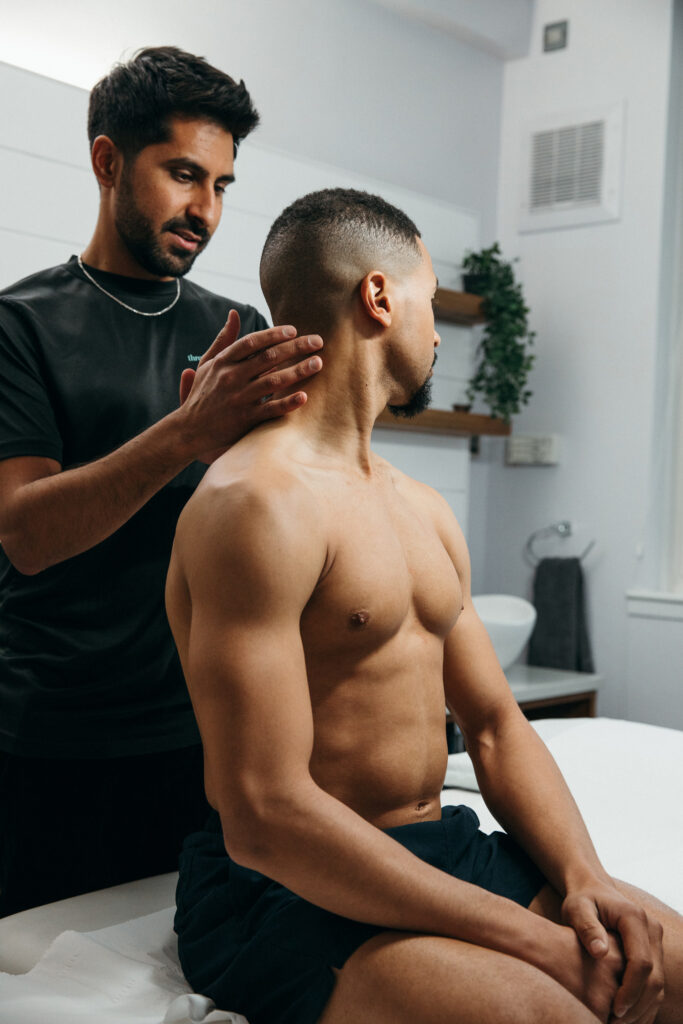
Daniel Cohen – Registered Osteopath BSc (Hons) Ost Med, DO, ND
Daniel has over 20 years of experience with patients and injuries of all sorts. It’s not just back that he treats, it’s anything from head to toe and anyone from children to elderly patients.
Daniel is available at The Lab On Mondays and Fridays and happy to answer any question you may have so please ask him when you see him around the Gym or book a free 15 minute Q & A.
BOOK WITH DAN https://threesixtyphysio.selectandbook.com/